
Cooperatives have demanded the abolishment of income tax on theirs as well as the state cooperative banks' earnings failing which they would resort to agitations across the country.
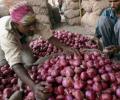
The Centre on Thursday began the first phase of retail sales of onion at a subsidised rate of Rs 35 per kg to provide relief to Delhi-NCR and Mumbai consumers from rising prices of the kitchen staple. NCCF and NAFED, which are maintaining a buffer stock of 4.7 lakh tonne onion on behalf of the government, will undertake the retail sale through their own stores and mobile vans. Onion will be sold at 38 retail points in Delhi-NCR and Parel and Malad in Mumbai.

National Agricultural Cooperative Marketing Federation, the central government's procurement agency for non-cereal crops, is in talks with leading retail companies to serve as a back-end supply chain in agri-commodities.

Concerned over skyrocketing prices of onion due to supply scare in the market, government on Monday decided to import onions from China and Pakistan to tide over the crisis.
The National Agricultural Cooperative Marketing Federation of India Ltd has decided to actively trade in imported edible oils after failing to procure sufficient quantity of mustard seeds from the domestic market due to high price.
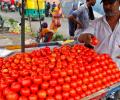
The Centre on Monday directed cooperatives NCCF and NAFED to sell tomatoes at a reduced rate of Rs 50 per kilogram from Tuesday in view of the decline in prices in the wholesale markets. Since July, both NCCF and NAFED have been selling tomatoes at a discounted rate on behalf of the consumer affairs ministry in Delhi-NCR, Uttar Pradesh, Rajasthan and Bihar to boost domestic availability and contain price rise. Initially, the ministry had asked the two cooperatives to sell tomatoes at a subsidised rate of Rs 90 per kg and later reduced the price to Rs 80 per kg. Further, the price was cut to Rs 70 per kg.
In a bid to boost onion exports and ensure remunerative prices to farmers, the Union Cabinet on Tuesday night decided to remove quantitative restrictions on its export.

In a statement, the department of consumer affairs said about 18,000 kg of tomatoes were sold across Delhi-NCR to retail consumers.

Tomato prices in the retail markets of the national capital declined to an average Rs 150 per kg on Monday from Rs 178 per kg on Sunday, according to the government data. However, e-commerce players such as Amazon, Big Basket and Otipy are selling tomatoes at Rs 170-190 per kg in Delhi-NCR. Blinkit is selling at Rs 138 per kg. The Centre is selling tomatoes at a subsidised rate of Rs 80 per kg in Delhi-NCR and some other cities through the National Cooperative Consumers' Federation of India (NCCF) and the National Agricultural Cooperative Marketing Federation of India (NAFED).

The Union government has reduced prices of subsidised tomatoes to Rs 70 per kilogramme from Thursday from Rs 80 per kg now to provide relief to common man from high retail prices. The Centre is selling tomatoes to people at a subsidised rate of Rs 80 a kg in Delhi-NCR and some other key cities through the National Cooperative Consumers' Federation of India (NCCF) and the National Agricultural Cooperative Marketing Federation of India (NAFED). The all-India average retail prices of tomatoes is ruling at nearly 120 per kg, although the key kitchen item is selling as high as Rs 245 per kg at some places.

The Centre on Friday said it will sell 'Bharat Rice' in the retail market at Rs 29 per kg from next week to give relief to the common man and has also directed traders to disclose rice/paddy stock, as part of its efforts to control prices that have risen by around 15 per cent in the last one year. In a press conference, Union Food Secretary Sanjeev Chopra exuded confidence that these two measures along with the various restrictions of exports will help in cooling down the prices. Seeking to dispel market rumours, he categorically said the government has no plans to lift restrictions on rice exports any time soon.

The Centre will sell tomatoes at Rs 80 per kg from Sunday, as against Rs 90 per kg earlier, to provide relief to people from high prices of the key kitchen item in retail markets.

The price per kilogram of onion came down to Rs 2 to Rs 4, which angered the growers, who had stopped the auction at the APMC last week for a day.

Even before NCP-Ajit Pawar leaders came to meet in Delhi, the central government decided to buy 200,000 tonnes of onions from farmers at Rs 24.1 per quintal. This was among the highest prices at which onions have ever been bought from farmers.
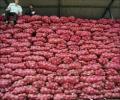
To give relief to Delhiites, the National Agricultural Cooperative Marketing Federation of India Ltd has started selling onions at Rs 55 a kg through its five retail outlets and two mobile vans in the national capital.
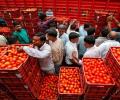
In a first, the Centre will start selling tomatoes at discounted rates in retail markets in the national capital and few other cities from Friday to provide relief to the consumers as the price of the kitchen staple is ruling high at over Rs 200 per kilogram in some parts of the country.

Speaking to reporters in Bengaluru on the sidelines of the Eighth National Conference on Krishi Vigyan Kendras 2013, Pawar also ruled out the possibility of traders exporting onions to other countries where prices are less than India.

Farmer Ishwar Gaykar (36), from Pachghar village in Junnar tehsil of Pune district, had faced a difficult decision of dumping a large quantity of harvested tomatoes in May this year due to low prices.

A panel of Union ministers held a fourth round of talks with farmer leaders in Chandigarh on Sunday over their demands, including a legal guarantee of MSP, as thousands of protesting farmers camped at the Punjab-Haryana border.
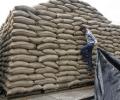
With grain procurement target significantly higher, FCI is faced with storage space shortage.
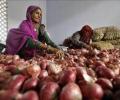
National Agricultural Cooperative Marketing Federation of India has floated tender after kitchen staple prices touched Rs 90 even though wholesale rates were much less at Rs 50-60 a kg.

Chief Minister Siddaramaiah after a Cabinet meeting here on Wednesday said that the government has decided to go for open market tender to procure rice, whose process will start from Thursday.

Barely days after imposing a 40 per cent export tax on onions to cool down soaring prices, which, in turn, triggered widespread protests across the main growing belts, the Centre on Tuesday sought to mitigate both political and economic tensions gripping parts of Maharashtra. It decided to procure an additional 200,000 tonnes of onions at Rs 2,410 per quintal for its buffer stock from farmers, a rate that is strikingly close to the price at which they were being exported before the 40 per cent duty was levied on August 19. The export price before the imposition of the duty stood at around $320 per tonne free on board (approximately Rs 2,650 per quintal).
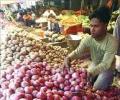
Sowing up 400%; prices may be low in 2014 as Maharashtra, MP and Bengal also likely to increase acreage 15-20%.
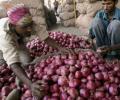
The fear of price rise gained momentum after reports surfaced that the NAFED procured 50,000 tonnes of onion this season.
At an average national price of Rs 90 a kg in the retail market, it shows a jump by 20% in the last two months.

'There are occasions when the prices of individual items like food raise inflation; then supply-side measures must be taken.' 'But if there is continued inflation, it means liquidity is aggravating the situation.'

State BJP minister Chandrakant Patil last week said Harshvardhan Patil will regret his decision to join the Pawar-led party.

Prices of the key vegetable have also gone up in various cities.

'Commerce Minister Piyush Goyal once told me that if onion prices rise we will face the flak for it across India.' 'What can farmers expect from a government which talks like a trader and only believes in (electoral) profit and loss?'

Shortage of seeds, threat of El Nino expected to restrict sowing.
Govt floated import tender, allowed import without fumigation.

In a pre-budget meeting with Finance Minister Arun Jaitley, the experts suggested timely implementation of the BJP's election manifesto promises to fix higher support prices. They also favoured a Kissan TV channel, an efficient procurement policy, priority for farm mechanisation and the linking of rivers.
Traders say prices will remain elevated due to increased demand, lower availability
Traders estimate around 30 per cent of rabi crop damage.
Centre has already started work on developing a mechanism to ensure states producing any item in excess is able to transport it to other states where there is demand
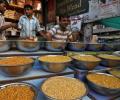
Over all trends indicate prices of pulses and onions have declined, and prices of all other commodities have remained stable across the country.

The Nafed has outstanding dues of Rs 224.26 crore (Rs 2.24 billion) as of February 15.

Tightening the noose around whistleblower IAS officer Ashok Khemka, Haryana government is preparing a second charge sheet against him for alleged low sale of wheat seeds during his tenure in Haryana Seed Development Corporation as its managing director from October 15, 2012 to April 4 this year.

The BJP veteran was detained on Monday evening while protesting against the state government's "apathy" towards the farmers of Vidarbha. He was taken to the district police headquarters and later released.
 © 2026 Rediff.com - Advertise with us - Disclaimer - Privacy Policy - Sitemap - Feedback - About us - Terms of use - Grievances